Ovarian Cancer treatment varies according to health conditions of the patient . Primarily the stage of ovarian cancer should be identified with symptoms and medical test for cancer to do effective ovarian cancer treatment .
So this article will throw light on Ovarian cancer treatment and Symptoms
Know what Cancer is a Threat to the New Generation
Even though medical field is advanced , Cancer treatment methods are being novel cancer prevention still remains a question mark .
Cancer : Cells multiply generally but when they do multiply in abnormal way they lead to production of cancer cells
Cancer can affect any part of your body . Most commonly seen Cancer types in women are breast cancer and ovarian cancer .
Here let’s take a look at Ovarian cancer
Ovarian cancer treatment and Symptoms
Unbelievable but fact that even a female child of 0-2 age group gets diagnosed with ovarian cancer . These cases are mostly hereditary through genes that they carry .
Women from age of 19 – 60+ are highly prone to get ovarian cancer due to many reasons.
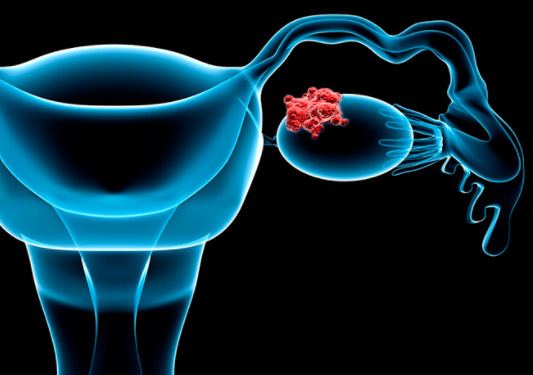
Ovarian cancer is a 5th most common type of caner found only in women which affects the female ovaries that are responsible for producing female eggs . One of the greatest threat for Ovarian cancer treatment is the late identification or delayed diagnosis of ovarian cancer . Because early stages of ovarian cancer doesn’t exhibit cancerous symptoms in the patient. So when diagnosed lately the ovarian cancer stages would have crossed which makes the treatment difficult .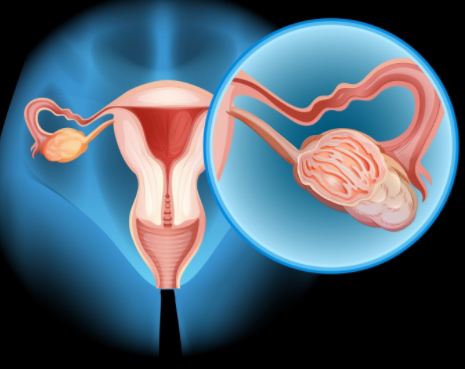
Ovarian cancer could be not harmful in effect or very infectious which may lead to cancer. Benign tumor does not spread to other parts of the patient’s body. Malignant cancer cells in the ovaries could spread to different organs in the pelvis and abdomen which is the most typical way found.
Causes of Ovarian Cancer – Do You know This Increases Your chance of Ovarian Cancer ?
We are not really sure to sure affirm that these are the exact causes of ovarian cancer or these things would increase your chances of ovarian cancer . But more or less these can also pave way to ovarian cancer .
Below are the common causes of ovarian cancer – Exclusive list :
- Growing older
- Faulty Inherited Genes ( BRCA1 , BRCA2 genes )
- Already diagnosed with breast cancer ( Previous history of breast cancer in medical records)
- Taking Fertility Treatment or Infertile uterus
- Usage of HRT therapies
- BMI greater than 28
- Taller women has risk of ovarian cancer
- Obese women has high risk of ovarian cancer
- Previous record or present record of Endometriosis
- Using talcum powder below waist especially between legs
- Junk food and poor diet
- Smoking
- Being Alcoholic
- Not breastfeeding
- Unhygienic way of using pads longer time
Read Also : Menstrual Cups, a solution to the pad effect-Another Period
These are the commonly seen causes of ovarian cancer diagnosed in women.
Prevent Ovarian Cancer – Know This can Reduce Risk of Ovarian Cancer in You
Know what certain things that you never thought would be helpful and boon . It can prevent ovarian cancer in you or even reduce risk of ovarian cancer on you .
So let’s take a look at the points given below to know ways to prevent ovarian cancer or things that reduce ovarian cancer risks –
- Breastfeeding babies longer
- Sterilization by tied up fallopian tubes
- Hysterectomy
- Delivery of babies
- Contraceptive pills usage
- Non starchy diet
Read Also : Breast Sagging – Things that every women must know
Types of Ovarian Cancer
Different types of ovarian cancer are classified according to the type of cell from which they start.
-
Epithelial tumors
- Mostly 90 percent of ovarian cancers create in the epithelium which is the thin layer of tissue that covers the ovaries.
- Postmenopausal women are more prone to the risk of being affected with Epithelial tumors.
-
Germ cell carcinoma tumors
- Germ cell carcinoma tumors start in the cells that frame eggs.
- As germ cell carcinoma can occur in women of any age specially it tends to be found most often in women in their early 20s.
- Germ cell carcinoma is of six types that exist, but the three mainly common types are: dermatomes, dysgerminomas and endoderm sinus tumors.
- Many tumors that occur in the germ cells are not harmful in effect.
-
Stromal carcinoma tumors
- It creates in the connective tissue cells that hold the ovary together and those that produce the female hormones estrogens and progesterone.
- Unlike epithelial ovarian carcinoma, around 70 percent of stromal carcinoma cases are diagnosed in Stage I.
-
Small cell carcinoma of the ovary
- Small cell carcinoma of the ovary is a rare and highly harmful tumor that affects mostly young women, with an average age at diagnosis of 24 years old.
- The subdivision of a type of SCCO include pulmonary, neuro-endocrine and hypercalcemic whereas around two-thirds of patients with SCCO have hypercalcemic.
- The symptoms are the same as other types of ovarian cancer.
Read Also : Cancer fighting meal plan to healthy life – Cancer Types, Symptoms
What are the Signs & Symptoms of Ovarian Cancer ?
It is difficult to detect ovarian cancer, especially in the early stages. This is because of the reason that the ovaries are two small like almond-shaped organs on either side of the uterus that are deep within the abdominal cavity. The following are the signs and symptoms of ovarian cancer recognized in women:
- Bloating
- Pelvic or abdominal pain
- Trouble eating or feeling full quickly
- Feeling the need to urinate urgently or often
Other symptoms of ovarian cancer can include:
- Fatigue
- Upset stomach or heartburn
- Back pain
- Pain during sex
- Constipation or menstrual changes
If symptoms are new and continue for over two weeks, it is recommended that a woman ought to without further more delay see a doctor and a gynecologic oncologist before the surgery if the growth of cancer is suspected.
Persistence of Symptoms
At the point when the symptom are constant and they do not resolve with normal mediation for e.g. diet change, exercise, intestinal medicines or rest then it is very important for a woman to see a doctor. Symptoms used to normally occur during the advanced stages of ovarian cancer like stage 3 and 4 . Then that time the growth of tumor creates pressure in the bladder and rectum, and fluid starts to frame.
Ovarian Cancer Treatment
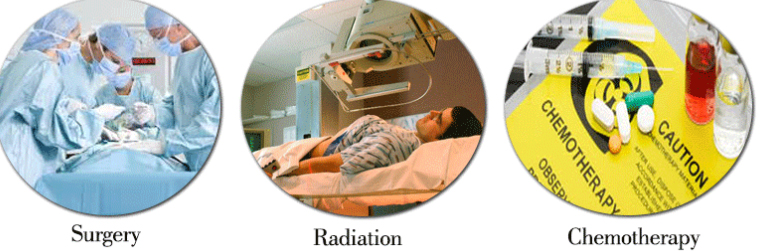
- The standard treatment for ovarian cancer comprises of debulking surgery followed by six rounds of chemotherapy.
- The reason for treatment for ovarian cancer is to surgically expel the cancer which is likely through the debulking surgery and then later to provide therapy such as chemotherapy, to slaughter any perhaps remaining cancer cells in the body.
Read Also : Best Pre-existing Cancer Health Insurance For different Countries
Post Diagnosis of Ovarian Cancer
- A gynaecologic oncologist will explain to a woman patient the nature of the operation and the amount of tissue that will be removed.
- During the operation, the doctor will also assess how far the tumor has spread in the patient’s body, to understand and determine the stage of the cancer.
- The doctor will give tissue samples to a pathologist, who will find out the level of the ovarian cancer.
- Post operation, the doctor will examine the nature of the chemotherapy that will be given to the patient, which will rely on the stage of the disease and how much of the tumour was evacuated.
Chemotherapy
- Patients go through chemotherapy in an effort to kill any cancer cells that are left in the body after surgery.
- Women suffering from ovarian cancer post surgery usually go through to either systemic chemotherapy or systemic chemotherapy and intraperitoneal therapy.
- The chemotherapy nurse plays a very important role as health care professional in a patient’s life as she or he assesses the side effects of the drugs and helps alleviate them.
Intraperitoneal Chemotherapy
Intraperitoneal Chemotherapy is in which the doctor places the medicine directly into the peritoneal area through a surgically implanted port and catheter.
Neoadjuvant Chemotherapy
Some patients may receive chemotherapy before having surgery to remove their tumors thus this process is known as Neoadjuvant chemotherapy.
Read Also : Postpartum Ovarian Cysts – Symptoms and treatment
Ovarian Cancer Treatment Based on Stages of Ovarian Cancer
There are different grades and stages of ovarian cancer . So as the treatment for each stage of ovarian cancer differs .
Stages of ovarian Cancer
There are basically 3 grades of ovarian cancer which explains about the rapidness of cancer cells to spread in your ovaries . Grade 3 undifferentiated is the serious grade of ovarian cancer as they are too quick to grow an spread .
Now when we talk about stages of ovarian cancer it can be basically 4 stages of ovarian cancer .
Read Also : Cancer Preventing Ketogenic Diet Plans
Stage 1 Ovarian Cancer
In this the cancer cells are present in mild grades only inside ovaries or may be on the surface of ovaries
Stage 1a Ovarian Cancer indicates presence of cancer cells on only one of your ovaries
Stage 1b Ovarian Cancer indicates presence of cancer cells on both left and right ovaries
Stage 1c Ovarian Cancer means the cancer cells are found to be present on the surface of your ovaries . It can both ovaries or just one also
Women with stage 1 ovarian cancer undergo surgeries mainly as they are starting stage of cancer .
If it is grade 3 stage 1c ovarian cancer then chemotherapy is advised as the chances of cancer cells to grow is rapid than expectation level .
Stage 1a and 1b ovarian cancer treatment involves surgeries to remove womb , cervix , ovaries and Fallopian tubes
Stage 2 Ovarian Cancer
When growth of cancer cells is left untreated in stage 1 ovarian cancer then the person gets stage 2 ovarian cancer . In stage 2 ovarian cancer treatment level is extensive than stage 1 . In this cancer cells started to grow near pelvis and outside ovaries and may even extend to abdomen area.
Stage 2 (2a Ovarian Cancer) Here cancer cells are grown inside Fallopian tubes
Stage 2 (2b Ovarian Cancer) growth of cancer cells to pelvis area
Stage 2 (2c Ovarian Cancer) growth of cancer cells to abdominal area
Interval debulking surgery , chemo-therapies and biological therapy are the primary ways of treatment for stage 2 ovarian cancer.
Read Also : Health Savings Account Detailed Guide & HSA Tax Benefits
Stage 3 Ovarian Cancer
It is advanced level of ovarian cancer where growth of cancer cells at abdominal lining and back of womb can be found
Stage 3 (3a Ovarian Cancer) Here cancer cells are grown in the abdominal lining which can be tested out from the tissue sample taken from abdominal linings
Stage 3 (3b Ovarian Cancer) 2cm growth of cancer cells in abdominal lining
Stage 3 (3c Ovarian Cancer) growth of cancer cells more than 2cm growth of cancer cells in abdominal lining or even at back of womb or lymph nodes
Stage 4 Ovarian Cancer
This stage the survival or effectiveness of treatment is not much appreciable . Ovarian cancer treatment for Stage 4 ovarian cancer includes repeated session of chemo.
Stage 4 ovarian cancer is so critical where cancer cells would have spread to many other parts like especially liver , lungs etc
Stage 4 (4a Ovarian Cancer) In pleura of lungs cancers cells are found in this stage
Stage 4 (4b Ovarian Cancer) In this cancer cells would have grown outside abdominal region and have moved to lungs , liver and to lymp nodes .
Identification of early signs of ovarian cancer is most important because early cancer treatment has the best survival rate . Women when getting aged can frequently make a CT scan and visit gynecologist regularly to know that you are healthy moving .
Ovarian cancer treatment should be done immediately if you are diagnosed with any of the stage because treatment has improved the survival rate of the disease .
As equal it is important to diagnose disease a hundred time more important it is to do precautionary you can to prevent ovarian disease. Like unhealthy habits , obesity , unhygienic menstruation all should be tackled out which is the least best you can do for your well being .