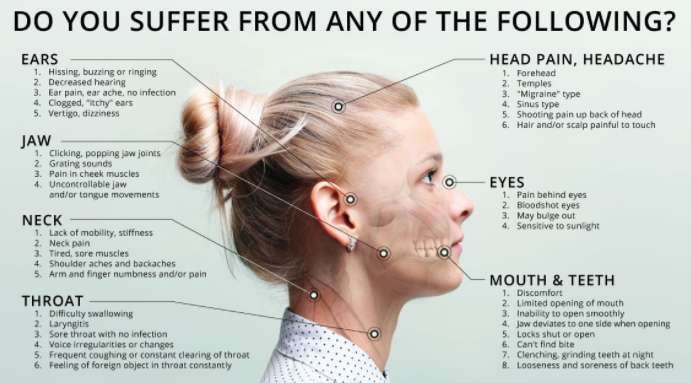
From the Headache Chart We can Diagnose Headache Types and Identify the Type of Headache you suffer from . To make it easy different headache symptoms is discussed to help you diagnose your headache type easily .
Do you know that there are various types of headaches that are caused in a person? Many of us are familiar with various form of the throbbing, uncomfortable, and distracting pain of a headache. The World Health Organization points out that almost every individual experiences a headache once in a while. But it is very important to Diagnose Headache Types to treat it.
Diagnose Headache Types from Headache Chart
Even though headaches can be defined as pain in any area of the head, the cause, duration, and intensity of this pain can vary according to the different types of headache.
In some cases, an individual suffering from headache may require immediate medical attention. And primary thing to treat headache is to Diagnose Headache Types to cure it . One must seek immediate medical care if he/she is experiencing any of the following alongside your headache:
- Stiff rigid neck
- Rash
- Unbearable headache
- Vomiting
- Confusion
- Slurred speech
- Any fever of 100.4°F (38°C) or higher
- Paralysis in any part of your body or visual loss
Here are various types of headache one may suffering from ,read on to learn how to identify the type of headache you may be experiencing and how you can Diagnose Headache Types to ease your symptoms.
Primary headaches
Primary headache happens not because of any other conditions it is a headache that happens just because of the condition of headache itself .
While secondary headache happens when a person has some other health condition that causes headache , say imbalance in hormone during periods or pregnancy that triggers headache those are all secondary headache.
These headaches can be either episodic or chronic:
- Episodic headaches
Episodic headaches may occur often or even just once in a while. This kind of headache can last somewhere from half an hour to several hours.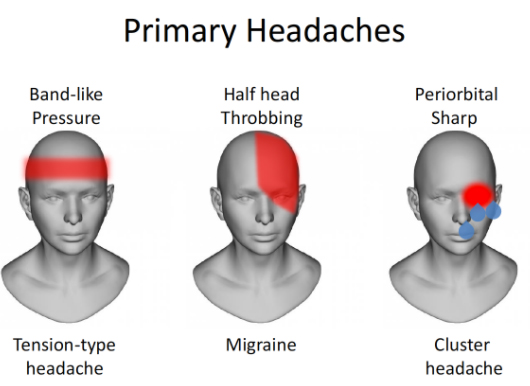
- Chronic headaches
Chronic headaches are more consistent and regular. They happen to occur frequently on most day on a month & sometimes this chronic headaches can last for several days . In these cases, a pain management plan is necessary to observe.
Read Also : Neurological Botox Treatment that really Works as Miracle
Tension headaches
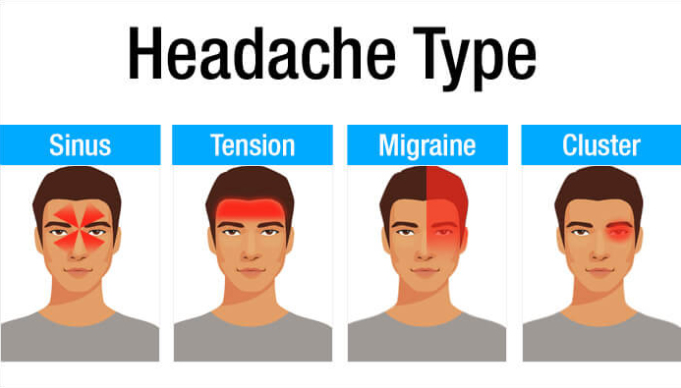
This kind of headache can often occur when a person is in stressful situation or in tension. You may feel a dull, aching sensation all over your head. It isn’t throbbing. Any individual can suffer from tension headache, and they’re often triggered by stress.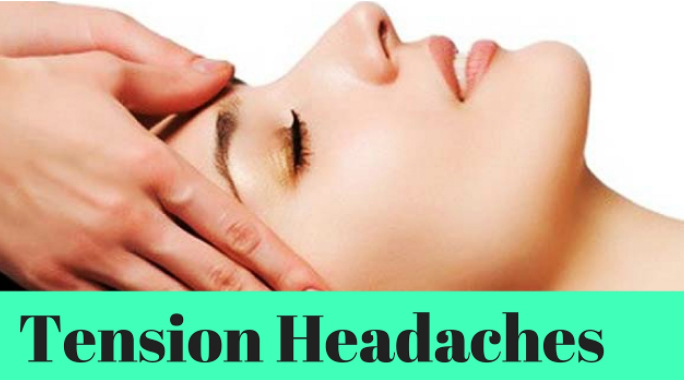
Symptoms Of Tension headaches
- You might feel sensitivity caused around your neck forehead, scalp, or shoulder muscles .
Read Also : Obstructive sleep apnea treatments ,therapies that really works
Cluster headaches
Cluster headaches are another type of headache that is characterized by:
- severe burning
- piercing pain
They occur around or behind one eye or on one side of the face at a time.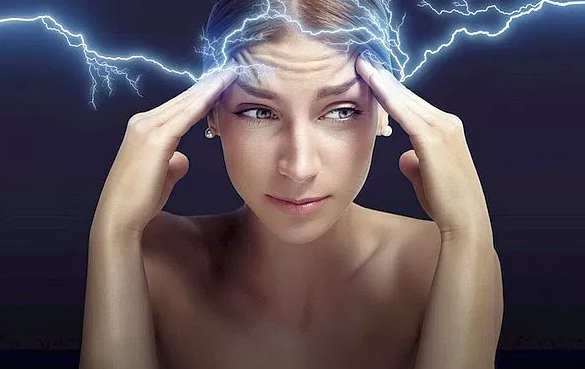
Symptoms of Cluster headaches includes –
- Sometimes swelling
- Redness
- Flushing
- Sweating can occur on the side that’s affected by the headache.
- Nasal congestion
- Eye tearing also often occur on the same side as the headache.
Read Also : Nonstimulant Therapy Side effects and specifications
Every individual headache can last from 15 minutes up to three hours. Most people experience one to four headaches in a day, usually around the similar period of time every day that one can observe, during a cluster.
Cluster headaches are more common in the spring and fall season. They are also three times more common in men.
Migraine
Migraine pain is mostly identified in a person that causes an intense pulsing from deep within your head. Migraine pain can last for days in a person. The migraine headache considerably limits your ability to work and carry out your daily routine activities. Migraine headaches are throbbing and usually one-sided. People with migraine headaches are often sensitive to raise of light and sound.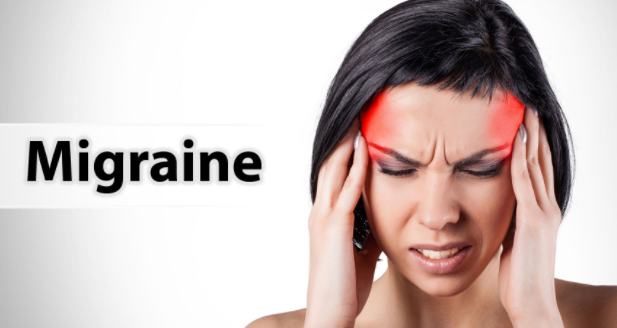
Migraine headaches symptoms include –
- Nausea and vomiting also usually occur
- flashing lights
- shimmering lights
- zigzag lines
- stars
- blind spots
- Auras can also include tingling on one side of your face or in one arm and trouble speaking.
- However, migraine symptoms may be alike as stroke symptoms , don’t ignore it but take a medical check up immediate.
Women are three times more likely to develop migraines than men. People with post-traumatic stress disorder also have an increased risk for migraine headache.
Some of the causes of migraine headaches are even associated with certain environmental factors, such as sleep disruption, dehydration, skipped meals, some foods, hormone fluctuations, and exposure to chemicals are common migraine triggers.
Migraine treatments varies from person to person depending upon the migraine types.
Allergy or sinus headaches
Sinus Headaches always is one of the complicated headache . And it is the most misunderstood or misdiagnosed headache . Because Migraine headache vs Sinus headache differentiating between them is quite tough . To a greater percentile sinusitis or asthmatic or allergic people headache are sinus headache .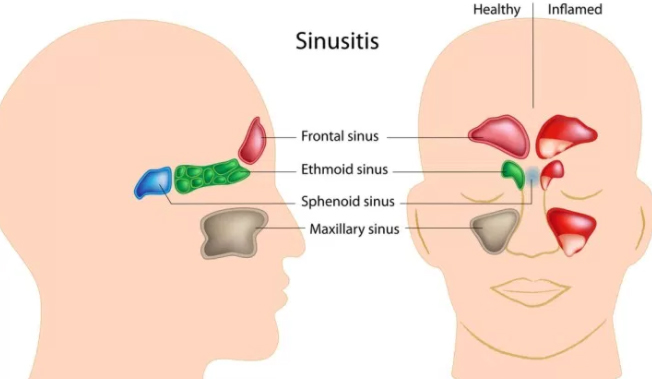
Hormone headaches
Women usually experience headaches that are related to hormonal fluctuations like:
- Menstruation
- Birth control pills
- Pregnancy all affects your estrogen levels, which can cause a headache.
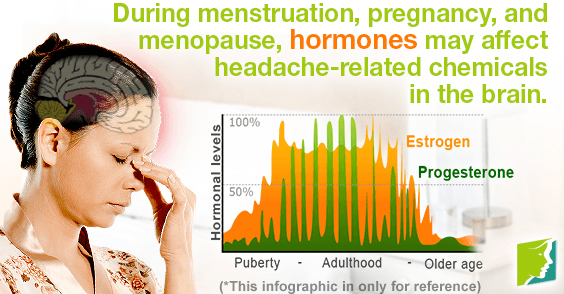
Those headaches related specially with the menstrual cycle are also known as menstrual migraines which can occur right before, during, or right after menses, as well as during ovulation.
Read Also : Menstrual Cups, a solution to the pad effect-Another Period
Caffeine headaches
Caffeine usually affects blood flow to an individual’s brain. Having too much of caffeine can give you a headache, as can quitting caffeine “cold turkey.” People who have regular migraines are at risk of triggering a headache due to their much caffeine use.
An individual might get a headache if he/she doesn’t get their caffeine fix. It is not necessary that everyone who cuts back on caffeine will experience a withdrawal headache. So it is important to Keep your caffeine intake at a steady, reasonable level — or quitting it entirely — can prevent these headaches from happening.
Read Also : Dangerous Teabags – Brands making you Sick with Healthy Label
Read Also : Tea Vs Coffee – The Best Energy Drink Motivating Healthy Life
Exertion headaches
Exertion headaches happen quickly after intense physical activity that triggers for an exertion headache like: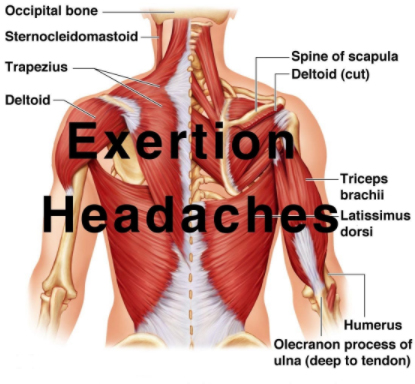
- Weight lifting
- Running
- sexual intercourse
- These activities causes increase in blood flow to your skull, which can lead to a throbbing headache on both sides of an individual’s head.
Read Also : TMJ Headache Must be Treated – Symptoms & treatments
Hypertension headaches
People with High blood pressure can have a headache, and this kind of headache signals an emergency diagnose. Hypertension headaches occur when your blood pressure goes high.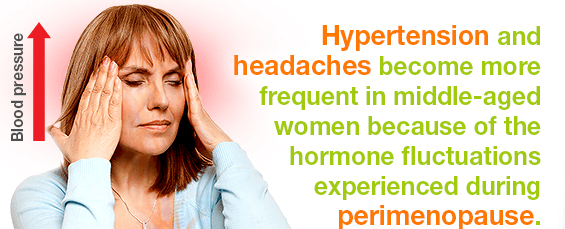
Symptoms:
- A hypertension headache usually occur on both sides of an individual’s head.
- You may also experience changes in vision, numbness or tingling, nosebleeds, chest pain, or shortness of breath.
- if you’re treating high blood pressure are prone to this type of headache.
Read Also : Reduce Stress in Busy lifestyle with this Excellent Lifestyle Hacks
Rebound headaches
Rebound headaches, also known as medication overuse headaches, can feel like: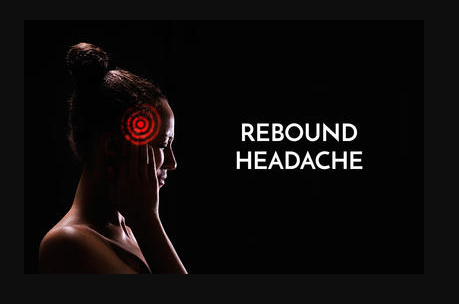
- dull
- tension-type headache
- they may feel more intensely painful, like a migraine
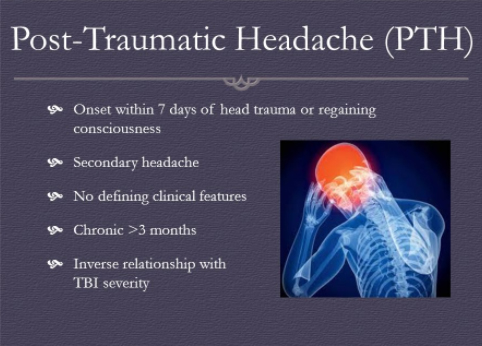
Post-traumatic headaches
Post-traumatic headaches can develop after any type of head injury occurred by an individual.These headaches feel similar to migraines or tension-type headaches, and usually last up to 6 to 12 months after your injury occurs that can become chronic.
Read Also : PTSD symptoms – How serious is Post Traumatic Stress Disorder
Hope this will help you to Diagnose Headache Types easily by understanding the symptoms of different type of Headaches. Once you identify the type of headache you suffer from you can easily start an effective headache treatment.